Renovate, Detonate or Relocate?

Renovate, Detonate, or Relocate?

It is one of the most common and most significant questions families face.

“Do we renovate what we have, knock it down and start again, or move altogether?”

There is no universal answer. What matters is making a decision grounded in clarity rather than assumption. When approached thoughtfully, the right pathway usually becomes clear.

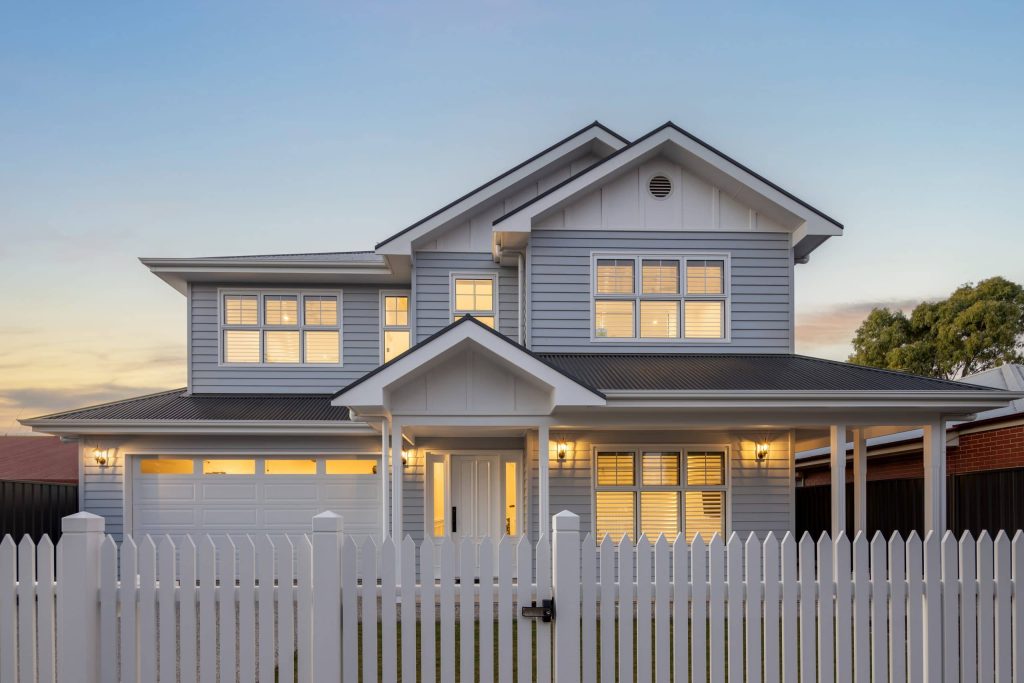
Hamptons Style Family Oasis by Claridge Construction

Finance – The Part That Often Surprises People

Many homeowners assume renovating will be the more economical option. In reality, substantial renovations can be just as expensive, and sometimes more so, than building new.

The reason is simple. Renovating is rarely predictable.

Once walls are opened in an older home, it is common to uncover outdated wiring, ageing plumbing, structural framing that does not meet current standards, inadequate footings, or insulation that falls well short of modern performance expectations. In some homes, asbestos or other legacy materials may also be present.

Under the current National Construction Code, significant structural works can trigger compliance upgrades to bring parts of the home up to today’s standards. That may involve improvements to insulation, glazing performance, waterproofing, structural integrity and energy efficiency. These upgrades are essential, but they add cost quickly.

There is also the reality that renovating requires trades experienced in working with unknown conditions. That expertise is highly specialised. It involves problem-solving in real time, carefully integrating new work with old structure, and managing risk. It is rarely straightforward.

Renovation can absolutely be the right choice. But financially, it is not automatically the more economical pathway people often expect.

Sell and Move, or Knock Down and Stay?

If building new feels like the right direction, the next question becomes whether to stay in your current location or relocate.

Moving offers a complete reset. For some families, the appeal is not just the new home, but the opportunity to reimagine their lifestyle. A larger block, a coastal or hills setting, closer proximity to schools or retail hubs, more greenery, or a shift in proximity to extended family can all be powerful motivators.

If you are able to sell well and purchase land in a preferred suburb at a similar price point, moving can improve both your home and your lifestyle in one decision.

However, transaction costs are real. Stamp duty, agent fees, marketing expenses and relocation costs need to be factored into the equation carefully.

On the other hand, a knock-down rebuild allows you to remain in the community you already know and value. You keep your neighbours, your children’s school zone, your commute and the familiarity of local amenity. You also avoid paying stamp duty on a new purchase.

There are, however, holding costs to consider. During construction you will require temporary accommodation and potentially storage. Depending on market conditions, renting elsewhere for the duration of a build can be both expensive and logistically challenging.

When the numbers are assessed properly, there is often less financial difference between moving and rebuilding than many expect. In most cases, the decision ultimately comes down to lifestyle alignment rather than pure dollars.
The Reality of Renovating Older Homes

If your heart is set on renovating, it is important to understand the structural and design realities.

Many older Australian homes were built before modern energy efficiency requirements and current structural standards. When stripped back, it is common to discover minimal insulation, single-glazed windows, shallow footings, framing not designed to support extensions, or roofing and plumbing approaching the end of their lifespan.

Bringing an entire home up to contemporary performance levels can be expensive and complex. In some cases, the cost of upgrading what exists outweighs the value of preserving it.

There is also the matter of design limitation. Renovating means working within the orientation, ceiling heights and structural logic of an existing building. That can restrict your ability to optimise passive solar performance, spatial flow and long-term functionality.

By contrast, building new allows you to design intentionally for the South Australian climate from the outset. Orientation, glazing placement, insulation, passive heating and cooling, electrification and smart energy management can all be integrated seamlessly. The result is often a more energy-efficient, lower-maintenance and future-ready home.

For many families, once renovation costs and design constraints are weighed against a knock-down rebuild, the new-build option provides greater clarity and long-term value.

So What's the Right Choice?

There is no one-size-fits-all solution.

If the block is exceptional but the dwelling has limited merit, a knock-down rebuild is often the most practical pathway.

If you are seeking a broader lifestyle shift and can sell and purchase strategically, moving can be an exciting reset.

If you truly love the existing home and are prepared for the financial and logistical realities, renovation can absolutely succeed, provided it is approached with clear eyes and careful modelling.

The key is not deciding based on assumption. It is deciding based on accurate financial analysis, realistic construction insight and an honest understanding of what your family wants from the next chapter.

That clarity is where confident decisions are made.

Start your journey

Our beautifully crafted homes are designed to protect, inspire and elevate your lifestyle.

Whether you’re ready to embark on your journey or simply exploring ideas, we’d love to hear from you.

Builders licence:
BLD173820

Email:
info@claridgeconstruction.com.au

Address:
1 Rowells Rd, Lockleys SA 5032

Phone:
(08) 8449 4490